Every camera is another inch of freedom lost. Florida’s traffic ticket cameras were never about safety — they’re about control, surveillance, and profit.
Stop The Cams is a citizen-led effort to expose and dismantle automated enforcement systems, defend privacy, and restore due process on America’s roads.
No spam. Opt out anytime.
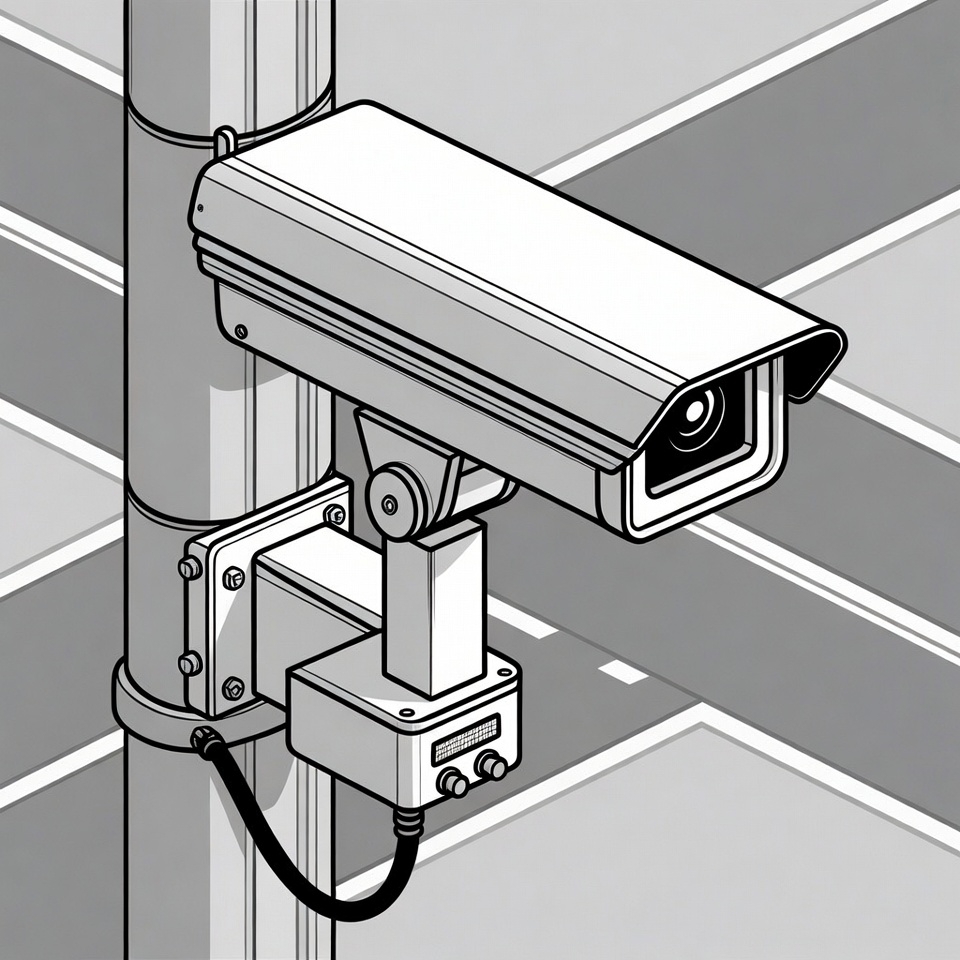
Traffic laws exist to promote safe, orderly movement on the road, not to generate revenue. For more than a century, police officers have been entrusted with discretion, using judgment and common sense to distinguish between willful recklessness and harmless error. That discretion was not a flaw; it was a safeguard, ensuring that enforcement remained tied to fairness, context, and public safety rather than profit.
Automated ticketing systems erase that human element. They transform every harmless technical infraction into a guaranteed fine, replacing judgment with machinery and liberty with control. American freedom has always rested on a simple principle: if there’s no victim, there’s no crime.
Liberty isn’t lost all at once—it slips away one small concession at a time. Automated enforcement cameras may seem like minor inconveniences, but they represent something far more dangerous. Nobody voted for this. It was imposed upon us, one intersection at a time, by corporations that profit from surveillance.
Since 2010, Florida drivers have paid more than $1.2 billion in automated ticket fines—most of it flowing to government revenue funds and private contractors.

"You never face your accuser, because your accuser is a machine."
In these automated cases, the government doesn’t need to prove you did anything wrong. If a machine captures an image of your car, you’re presumed guilty simply because you own it. You’re fined without testimony, cross-examination, or evidence that you were the driver. That’s not justice.
"Mass surveillance spreads not with one big law, but with thousands of little cameras."
Every camera is a silent sentinel watching you—tracking, recording, and storing data that can be used against you. Once installed, these systems rarely go away. Their feeds are increasingly tied to license-plate readers, facial-recognition systems, and private databases.
"Over $1.2 billion extracted — and citizens never approved it."
Citizens never voted to replace police officers with machines. They never approved these hidden taxes on everyday drivers. Yet powerful lobbyists and city contractors pushed these systems through local governments, promising “safety” and delivering only revenue. In Florida alone, over $1.2 billion has been extracted from drivers since 2010. Only a tiny fraction goes to public safety—the rest enriches city coffers and the corporations that built the cameras.
"Justice requires a human conscience."
In a free society, no one should ever be accused, charged, or punished by a machine. Justice requires a human conscience—someone who can be questioned, who can make mistakes, and who can be held accountable. When we surrender that to automation, we surrender the principle that government power must answer to the people.

"They manufacture the tools of technological tyranny."
The companies behind these systems aren’t local traffic experts or civic do-gooders. They’re multi-billion-dollar government contractors whose entire business model depends on turning ordinary citizens into revenue streams. They manufacture the tools of technological tyranny.
It’s time to draw the line. Stop The Cams exists to expose the abuse, defend privacy, and restore the constitutional principles that automated enforcement erodes every single day.
Camera vendors sold Florida on "safety." The results tell a different story. Florida’s statewide crash data shows more crashes, more dangerous crash types, and more serious injuries at red light camera sites. And no improvement in fatalities.
17,093 → 18,615
Statewide totals increased.
3,626 → 4,180
T-bone style collisions rose sharply.
8,424 → 9,121
More abrupt stopping, more collisions.
12,576 → 14,161
Collisions with property damage increased.
363 → 432
Severe outcomes increased.
35 → 36
No measurable safety benefit on deaths.
The most dangerous collision type — angle crashes — rose by 15.3%, and serious-injury crashes rose by 19.0%. Even with mass ticketing, fatalities did not improve.
Total, angle, rear-end, property-damage, and serious-injury crashes all increased after camera installation. That’s the opposite of “safety.”
Your support funds data analysis, public education, and the legal challenge defending due process and civil liberties in Florida.
Source: Florida DHSMV, Red Light Camera Report, FY 2023–2024.
See: Full FY 2023–24 report (PDF).
Behind every camera is a money trail. Since Florida legalized automated ticketing in 2010, the system has grown into a billion-dollar surveillance industry — fueled by fines, hidden fees, and private profit. These are the numbers they don’t want you to see.
The program’s stated goal is safety. But only about 8% of each fine funds anything remotely related to safety or health. The rest feeds general government spending and vendor profits.
Each fine divided among four recipients
Florida’s red light, speed, and school-bus camera programs have exploded over the past decade — creating a permanent, statewide network of surveillance systems. The number of automated citations issued each year now exceeds all criminal traffic citations combined. Local governments have become financially dependent on these systems, creating perverse incentives to keep them running indefinitely.
As more states copy Florida’s model, the “automated enforcement” industry has become a national enterprise — exporting its technology, lobbying for new laws, and seeking to normalize machine-driven policing across America.
Stop The Cams is currently advancing a constitutional challenge to Florida’s automated ticketing regime. Led by attorney Bret Lusskin, the case argues that camera-based enforcement presumes guilt, denies the right to confront an accuser, and replaces accountable policing with automated revenue collection.
First local programs begin operating photo-enforced ticketing at intersections.
Bret Lusskin secures an order holding that red-light camera programs were unlawful under then-existing law.
Florida enacts the Mark Wandall Traffic Safety Act, re-legalizing automated enforcement statewide.
Legislature authorizes additional automated systems, extending camera enforcement beyond intersections.
Lusskin commences a broad challenge to Florida’s camera-ticket regime, seeking to restore due process and accountability.
Broward County Court grants motion to dismiss, holding the red-light camera statute violates due process. Read the press release →
Litigate appeals in Florida or federal appellate courts.
Pursue return of unjustly collected fines to the citizens of Florida.
Get case updates, opportunities to support our legal efforts, and stay informed.